MyFishCam logo
MyFishCamLive aquarium stream
Live · 0 watching
Tank RadioReef Salt Sanctuary
MyFishCam live aquarium stream.
Aquarist’s noteWe added a mandarin goby and named him Mando. Can you find him?

Fish Cam

Aquarium dashboard

Live stream plus quick status cards for viewers, alerts, and tank info.

Watching now0
Stream statusLive
AlertsEmail ready

Who's in the tank?

20 residents 13 fish, 4 snails, and 3 shrimp are calling the tank home right now.
New resident

Welcome, Mando

A mandarin goby just joined the MyFishCam tank. Look near the sand and rockwork for his electric blue, orange, and green maze-like markings.

Side profile of Mando, a colorful mandarin goby

New resident

Mando the Mandarin Goby

Synchiropus splendidus

In the tank: 1

Mando is a small reef fish covered in electric blue, orange, and green patterns. Mandarin gobies spend much of their time gliding over rockwork as they search for tiny foods, making him a colorful resident to watch for near the bottom of the tank.

Home waters
Sheltered lagoons and coastal reefs across the western Pacific, especially among coral rubble and branching coral.
What they like
Mature live rock, peaceful tankmates, stable saltwater, and a steady supply of tiny crustaceans called copepods.
Fun fact
Despite the common name, mandarin gobies are actually dragonets and are famous for their swirling, psychedelic colors.
Side profile of a blue tang fish with a yellow tail

Blue Tang

Paracanthurus hepatus

In the tank: 1

Also known as Dory, this bright reef fish has an electric blue body, bold black markings, and a sunny yellow tail. Blue tangs are active swimmers, so Dory may cruise across the camera and then vanish back into the rockwork.

Home waters
Indo-Pacific coral reefs, usually around clear lagoons and reef slopes with plenty of room to swim.
What they like
Open swimming space, stable saltwater, algae-based foods, and sheltered places to tuck in when they want a break.
Fun fact
Blue tangs can wedge themselves into reef crevices at night, using their flattened bodies and tail spines for extra protection.
Foxface rabbitfish on a white background

Foxface

Siganus vulpinus

In the tank: 1

A bold yellow rabbitfish with a black-and-white face mask and a long pointed snout. Foxfaces are reef grazers that help pick at algae while bringing a bright flash of color to the tank.

Home waters
Indo-Pacific coral reefs, lagoons, and reef flats.
What they like
Open swimming room, rockwork to browse, stable saltwater, and plenty of algae-based foods.
Fun fact
Foxface rabbitfish have venomous dorsal spines, so tankmates usually learn to give them respectful space.
Yellow Watchman Goby on a white background

Yellow Watchman Goby

Cryptocentrus cinctus

In the tank: 1

A larger bottom-dwelling goby with bright yellow coloring and alert eyes. Yellow Watchman Gobies often stay near the sand and rockwork, keeping watch from a favorite burrow entrance.

Home waters
Shallow Indo-Pacific reefs, sandy lagoons, and rubble zones.
What they like
Sandy bottom areas, secure burrows, stable saltwater, and peaceful tankmates.
Fun fact
Yellow Watchman Gobies are famous for symbiotic partnerships with pistol shrimp: the shrimp digs while the goby keeps lookout.
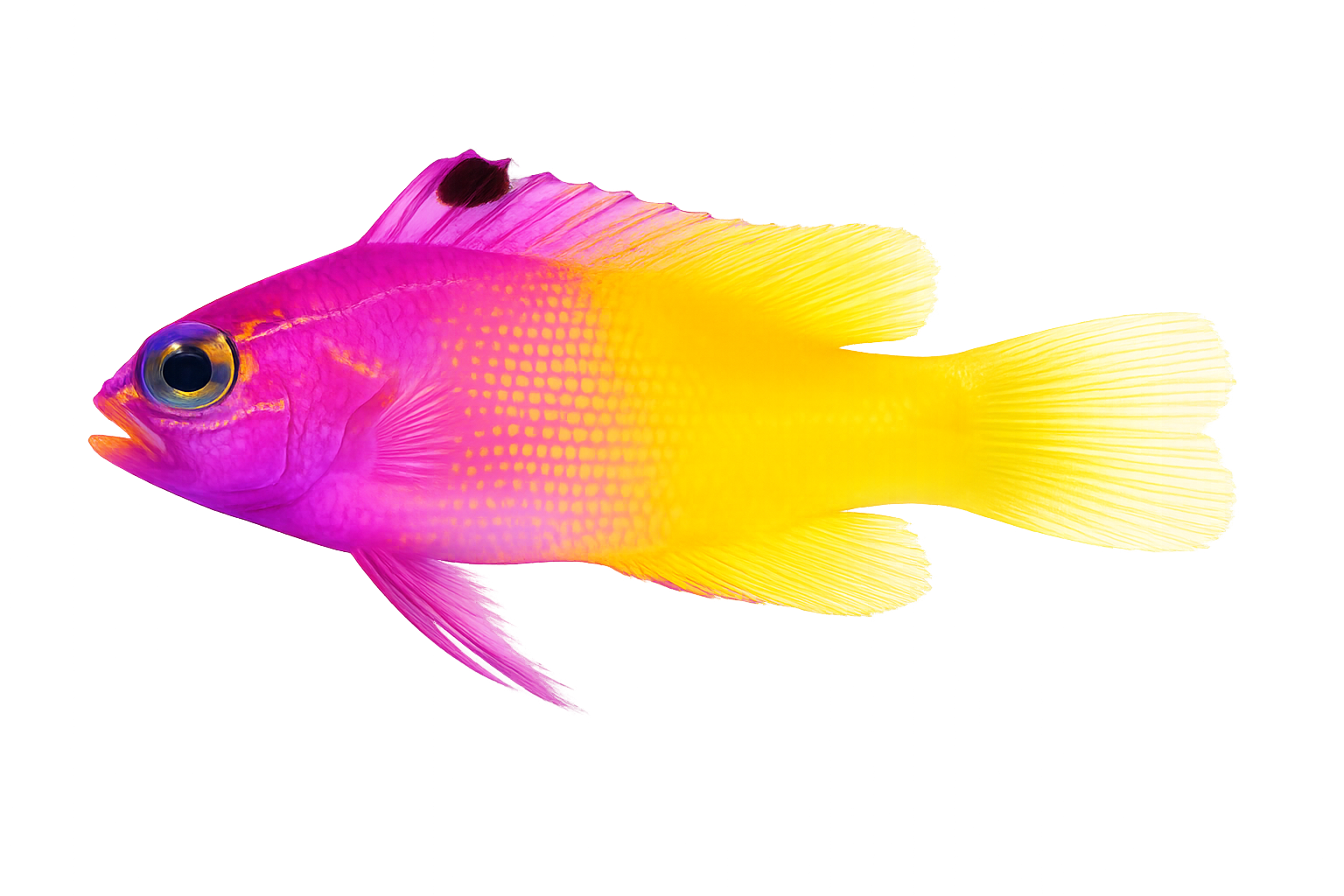
Floating adult Royal Gramma fish with a purple front half and yellow rear half

Royal Gramma fish

Gramma loreto

In the tank: 1

A bright Caribbean reef fish with a vivid purple front half and sunny yellow tail. Royal Grammas usually tuck into rockwork and hover near caves once they settle in.

Home waters
Tropical reef ledges and caves across the Caribbean and western Atlantic.
What they like
Peaceful tankmates, stable saltwater, rocky hiding spots, and small meaty foods.
Fun fact
Their purple-to-yellow color split makes them one of the easiest reef fish to spot on camera.
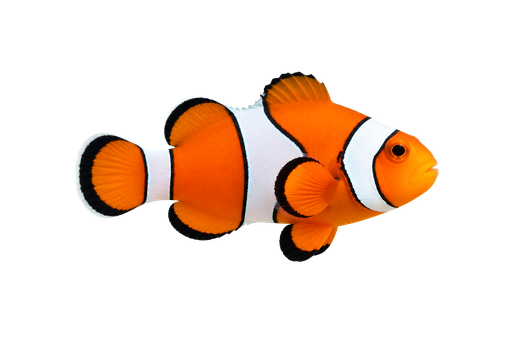
Side profile of an orange and white clownfish

Clownfish

Amphiprion ocellaris

In the tank: 2

Orange-and-white reef fish with bold black-edged stripes. Clownfish are famous for living safely among sea anemones, protected by a special mucus coating on their skin.

Home waters
Warm saltwater reefs and lagoons in the Indo-Pacific.
What they like
Sheltered reef spaces, steady warm water, and small meaty foods.
Fun fact
Clownfish can recognize and defend their favorite home area.
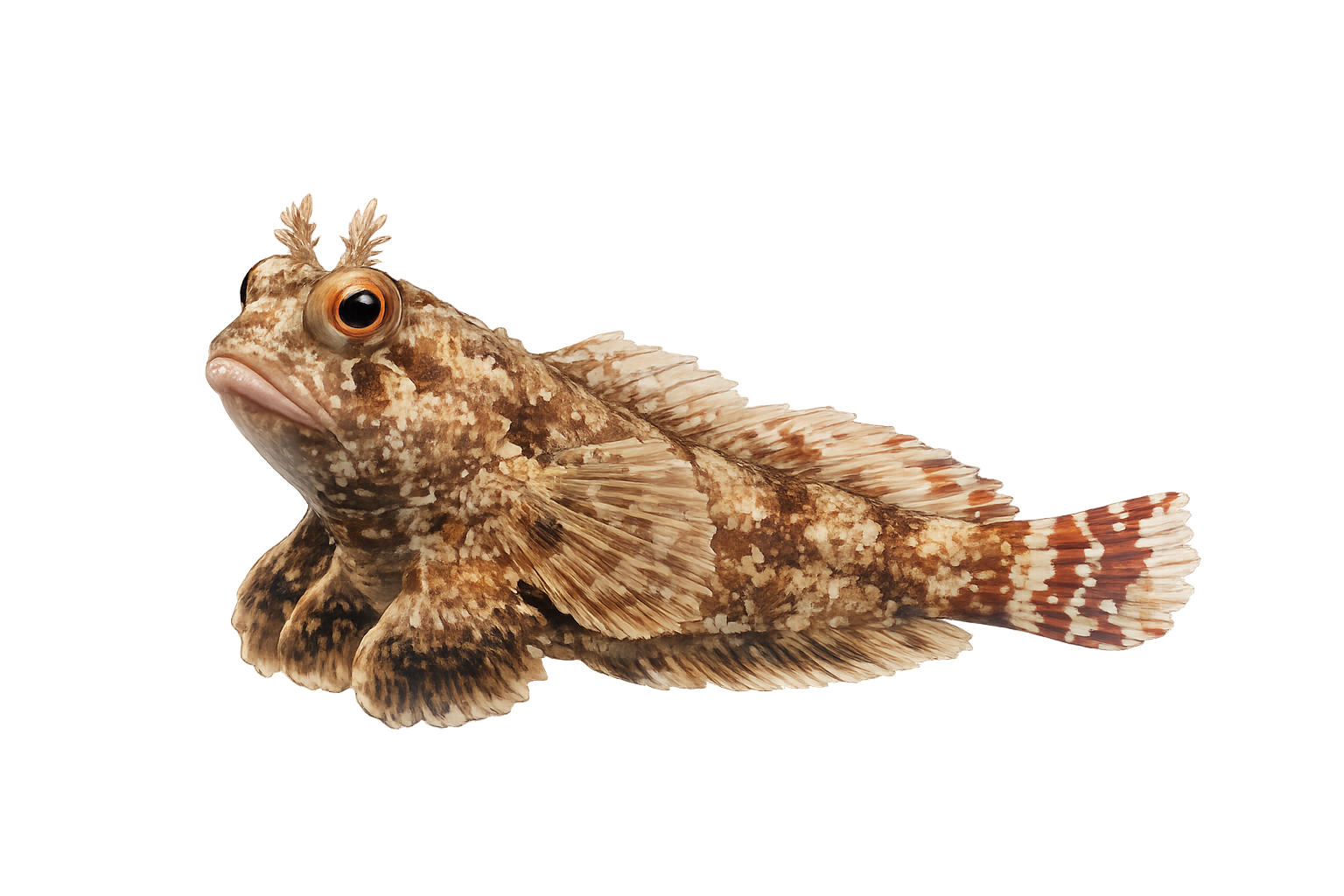
Floating Blenny fish with a mottled tan-brown body

Blenny

Blenniidae

In the tank: 1

A small personality fish that often perches in visible spots around the tank. This blenny came from Seaside Tropical Fish in Huntington Beach and should be great for close-up camera moments.

Home waters
Many blennies live around shallow saltwater reefs, rocky ledges, tide pools, and algae-covered surfaces.
What they like
Rockwork perches, little caves, stable saltwater, and spots where they can watch the tank from the bottom or ledges.
Fun fact
Blennies are known for expressive faces and quick little perch-and-hop movements that make them fun on camera.
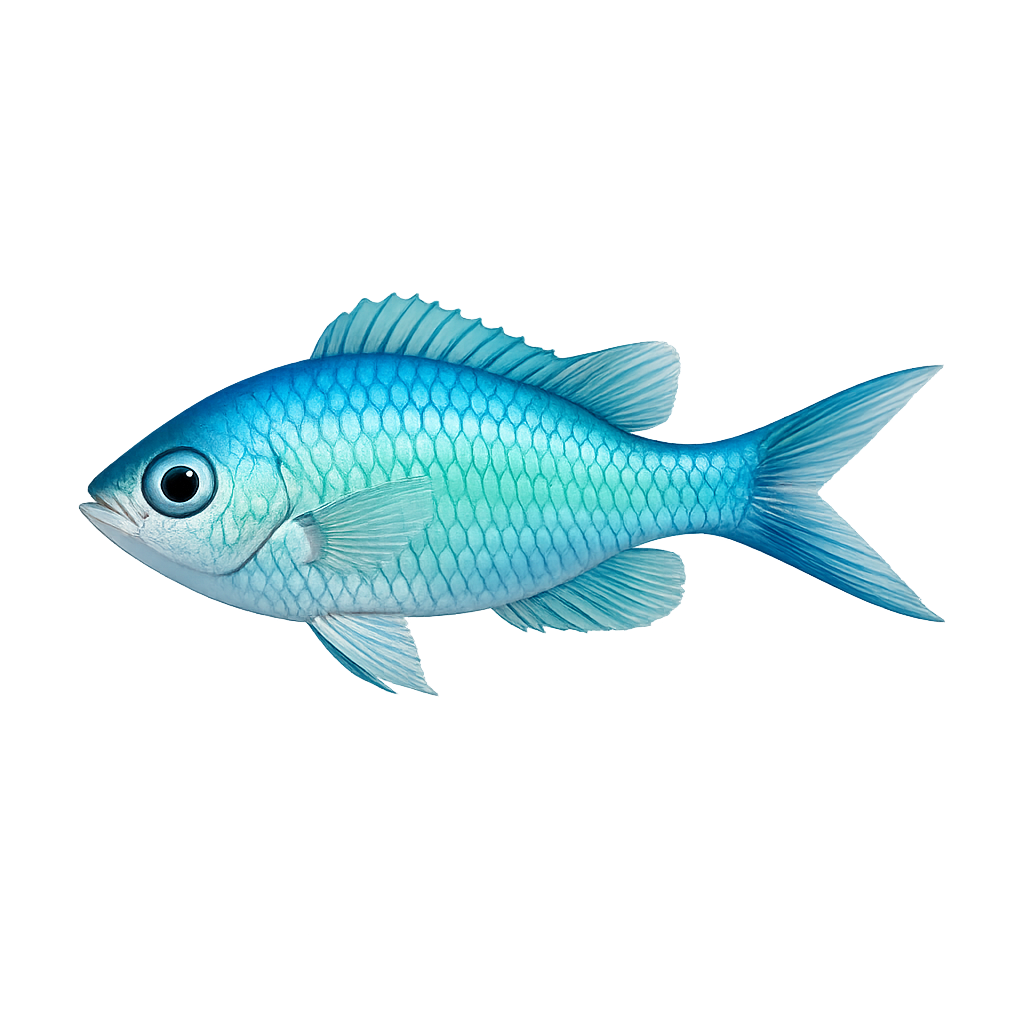
Side profile of a blue-green chromis fish

Blue-green chromis

Chromis viridis

In the tank: 3

Shimmering blue-green damselfish that often hover together above branching coral. There are three of these active little reef fish in the tank right now.

Home waters
Indo-Pacific coral reefs and lagoons, including the Red Sea and Great Barrier Reef.
What they like
Open swimming room, coral cover, and the safety of a small school.
Fun fact
Their iridescent color can shift from apple-green to light blue depending on the light.
Side profile of a Pajama cardinalfish with a red eye, yellow face, black band, and spotted body

Pajama cardinalfish

Sphaeramia nematoptera

In the tank: 2

A peaceful reef fish with a bright red eye, yellow-green face, dark middle band, and pajama-like red spots across the back half of its body. Pajama cardinalfish tend to hover calmly near shelter instead of racing around the tank.

Home waters
Western Pacific reefs, lagoons, and sheltered coral areas from Indonesia toward northern Australia.
What they like
Calm water, peaceful tankmates, protected hiding places, and small meaty foods.
Fun fact
Their polka-dot pattern is what gives them the “pajama” nickname.

Photo: Francois Libert / CC BY-SA 2.0, background removed.

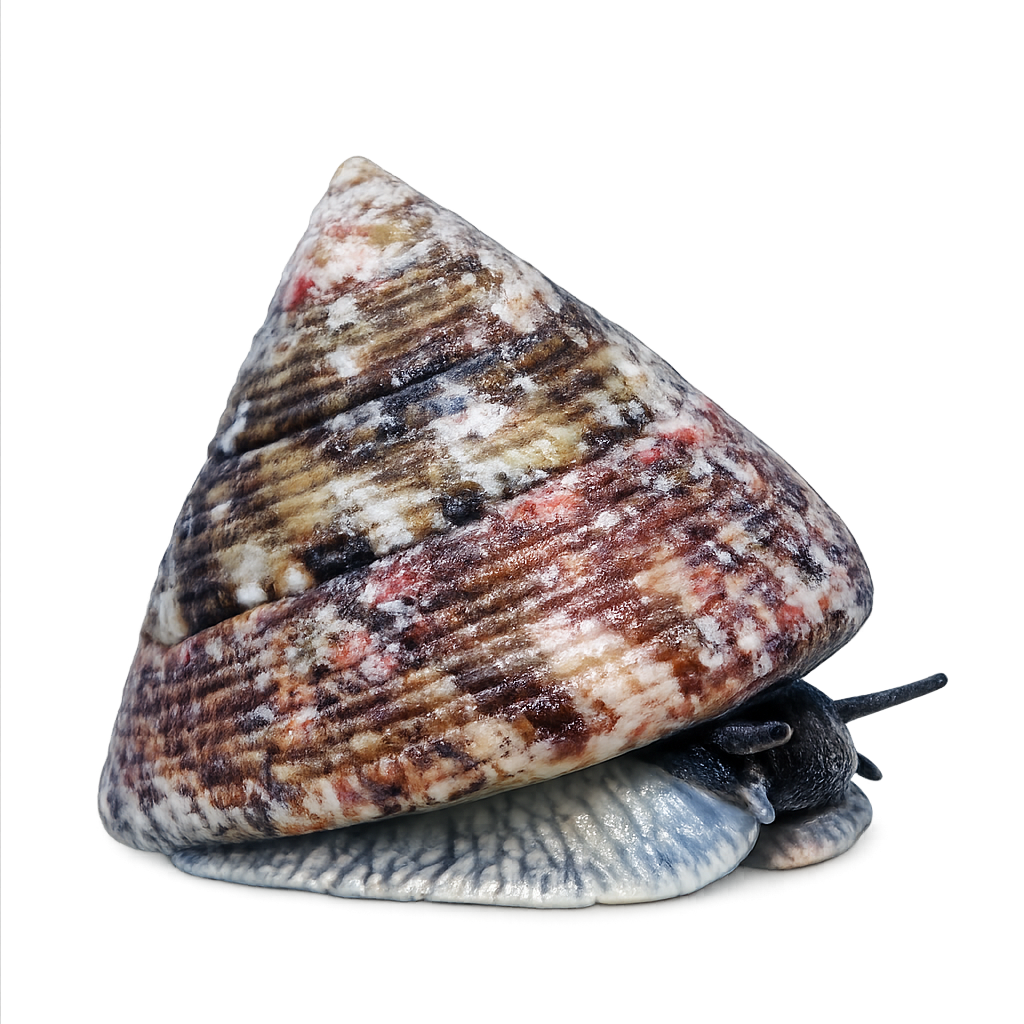
Realistic saltwater aquarium snail

Saltwater snail

Marine gastropod

In the tank: 4

A small cleanup-crew grazer that moves slowly over rocks, glass, and sand while helping tidy up algae and leftover bits.

Home waters
Saltwater reefs, tide pools, rocky shorelines, and sandy reef flats.
What they like
Algae films, stable salinity, and plenty of hard surfaces to explore.
Fun fact
Many aquarium snails do important invisible work by grazing surfaces that would otherwise grow algae.
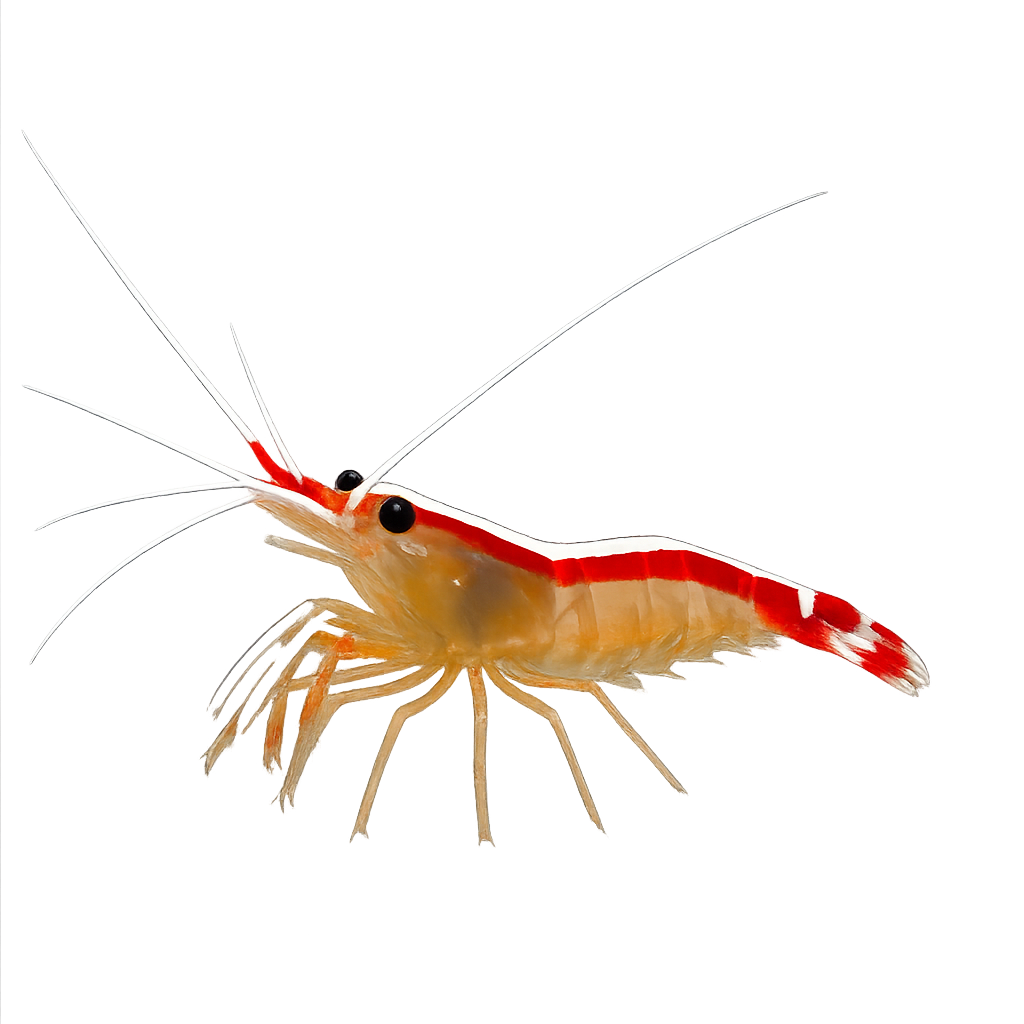
Cleaner shrimp with long white antennae

Cleaner shrimp

Lysmata sp.

In the tank: 1

A classic reef cleanup-crew shrimp with long white antennae and a bright white stripe down its back. Cleaner shrimp are known for picking leftover food and parasites from reef fish.

Home waters
Tropical Indo-Pacific reefs, often around coral heads, rockwork, and cleaning stations.
What they like
Stable saltwater, peaceful tankmates, rockwork perches, and small meaty foods.
Fun fact
Fish may visit cleaner shrimp like a tiny underwater car wash, pausing while the shrimp tidies them up.
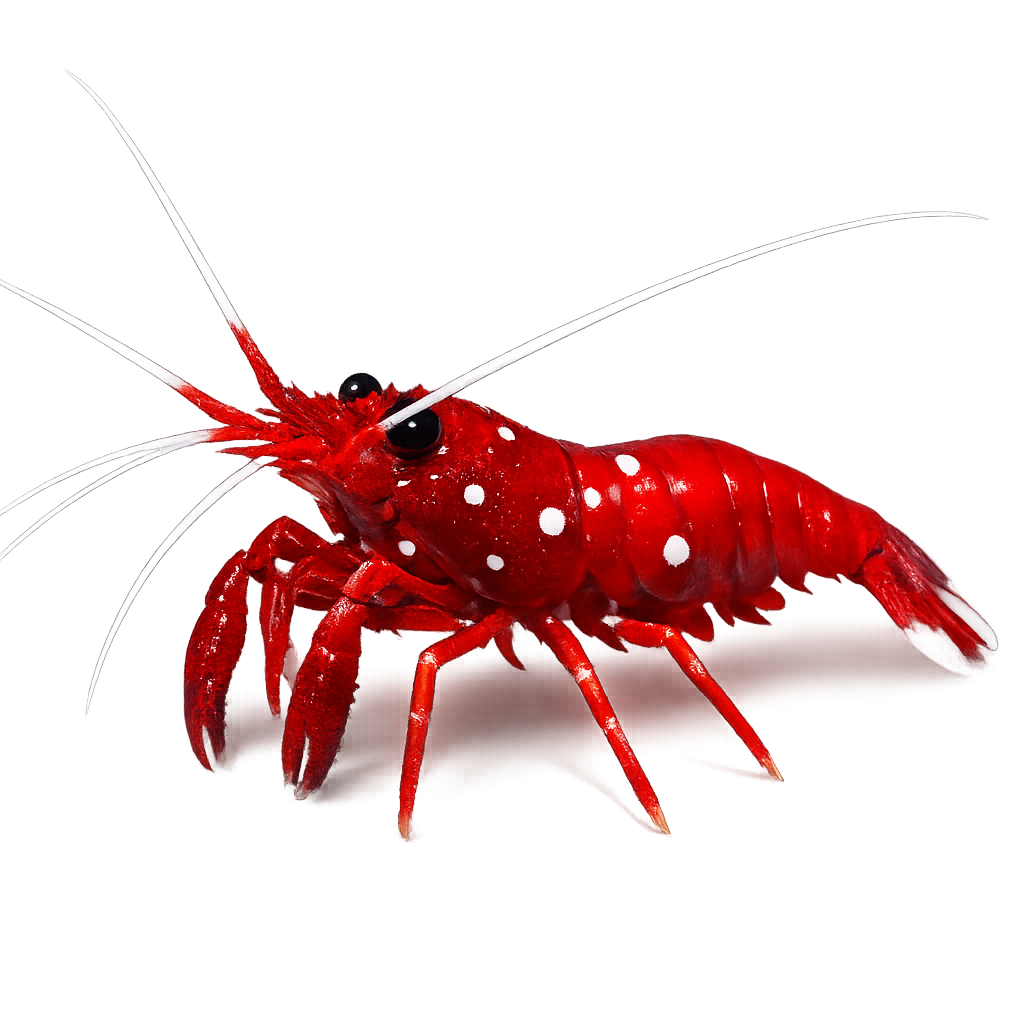
Blood red fire shrimp with white antennae

Blood red fire shrimp

Lysmata debelius

In the tank: 1

A brilliant red reef shrimp that likes to hang around caves and rockwork. This is the shy resident everyone is trying to spot on camera.

Home waters
Tropical Indo-Pacific reef slopes, caves, and ledges.
What they like
Quiet hiding spots, stable saltwater, peaceful tankmates, and small meaty foods.
Fun fact
Blood red fire shrimp can be bold at feeding time, then vanish back into the rockwork like nothing happened.
Tiger pistol shrimp with transparent background

Tiger pistol shrimp

Alpheus bellulus

In the tank: 1

A tiny burrowing shrimp that has made a few surprise appearances after the rockwork was moved, then disappeared back into hiding. We believe there is one in the tank, but spotting him is part of the game.

Home waters
Shallow Indo-Pacific reef flats, sandy lagoons, and rubble zones.
What they like
Sand, small caves, stable saltwater, and plenty of rockwork for tunnels and cover.
Fun fact
Pistol shrimp can snap one oversized claw so fast it makes a tiny underwater pop.